
 |
 |
Where have I been? What have I been up to?
The answer is one, perfectly beautiful granddaughter who will soon be a year old.
As well as cooking, baking, and recipes, I have long standing loves for needle arts. Basically, if it can be done with needles, I do it – sewing, dressmaking, knitting, smocking, needlepoint, cross stitch, and quilting. With a new baby, I was able to indulge all of these interests. I really love making things for babies and young children because they yield maximum results with a small commitment of time and materials and provide the maker with unlimited pleasure. Last Spring, my daughter Deanna captured most of these efforts for the record.
Countless sweaters and a crib quilt are some of the creations that have been added since. And if this stay at home continues much longer, my granddaughter will have enough sweaters to last her through elementary school!
Throughout, I have remained busy in the kitchen, reading and trying recipes, cooking through the holiday season last December and, as always, experimenting with all the elements that make for a fabulous taste experience.
Now, back to blogging!
With everyone staying in, bread-making seems to have become a national pastime. Along with toilet paper, flour and yeast are among the depleted grocery store items, driving some to experiment with sourdough starters.
Bread making and the wonderful smell of baking bread is in my blood. My Nain’s white rolls (like baps) were eagerly awaited at the baking table at the Welsh church’s fall bazaar.
My own mother wasn’t really into bread making but she always knew where to find bakeries that produced great breads, buns, and bagels. As a child, when we were at the cottage, we got our bread from Don’s Bakery in Bala. Along with their famous scones, they made a large, towering white loaf with a top crust so dark it was almost black. That was my favourite! Somewhere along the line they stopped making it and I have yet to find another bakery that makes such a loaf.
I love bread making and have been doing it for years. There have been some summers that I made bread almost every day, putting it out in the sun to raise (and keeping a sharp eye on the chipmunks) or on grey and rainy days, popping it in the oven with the light on.
Recently I have been playing around with yeast breads that are light on the kneading and the time commitment demanded of traditional breads. When this pandemic began I was working with a newly acquired cookbook, Ready, Set, Dough: Beginner Breads for all Occasions. The initial recipes have the process down to combining the basic ingredients (about 2 minutes), kneading (4 minutes either by hand or machine), rising (15 minutes), and bake (40 minutes, starting in a cold oven) – not more than 10 minutes of active work and just over an hour from start to finish. For those baking with young children, whose patience might be tried by the hours long process of traditional bread making, this approach yields about as close to instant gratification as you can get.
Aside – For those home schooling, baking bread offers many learning opportunities for children and touches on several areas of the curriculum (social studies, math, science, and literacy). In my kindergarten classroom we had a large group of children, refugees from Syria, who spoke no English. Bread is common to every culture and so we baked bread to create common bonds and connections. A discussion before we started, enabled us to collect and chart what we thought we already knew about bread and capture our questions. We talked about this being one of the ways scientists work. Throughout the process, we observed the different ingredients – how they looked, felt, smelled – and how they interacted with each other.The children observed the changes created by the addition of water to the dry ingredients, the changes wrought through kneading, the effects of heat on the dough. While we enjoyed our freshly baked bread, we returned to our chart to compare our experience and observations with what we had thought, to see if our questions had been answered, and to add new learning and observations to our chart. Older siblings could assist with the chart making.
Not one to leave a recipe alone, I used the techniques of the basic bread recipe but veered off to do my own thing. Substituting mayonnaise for the 2 tbsp of olive oil in the original recipe yielded a more tender, slightly more flavourful loaf. Using two eggs, lightly beaten, as part of the 2 cups of water, produced a slightly denser, crustier bread. Both breads were delicious and vanished in the blink of an eye.
Now I was ready to be more daring.
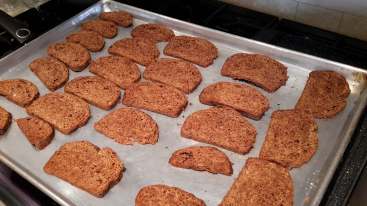
I wanted a loaf with more complex flavours but the same quick and easy approach. To achieve this, I substituted rye flour for some of the all-purpose and added allspice, grated orange peel, and fennel seeds. I also cut the water with some fancy molasses and substituted canola oil for the olive oil called for in the original recipe. The resulting loaf was boldly flavoured and the only change I would make going forward would be the addition of a handful of dark Thompson raisins. This bread lasted well for four or five days (mainly it survived that long because my son Peter does not like the licorice flavour of fennel). On day five, I thinly sliced the remaining bread and dried it in a low oven to make crisps. I can also imagine using this bread, cut into smallish squares, as the base for a canapé.
The cookbook I have been working with – Ready, Set, Dough: Beginner Breads for all Occasions — has several savory variations on the basic bread that are excellent and it also contains breads that have a more conventional approach. If you are looking for a book on bread, I’d certainly recommend this one.
A note before starting: the recipe uses both cup and weight measures. I find that the more accurate measure by weight (especially when using so much flour), generally results in a better end product. So many factors – such as the humidity in the air on a given day, how compacted the flour is in the measuring cup, etc – can have a significant effect on the amount of flour. Measuring by weight eliminates these variables that can adversely affect your baking. I use the weight measurements for all ingredients as appropriate. If you do not have a scale, the recommended method is to fluff up the flour in the bag then lightly spoon it into your measuring cup (be sure to use a dry measure cup), heaping it up a bit, then leveling it off with the flat edge of a knife.
Now – on to the bread!
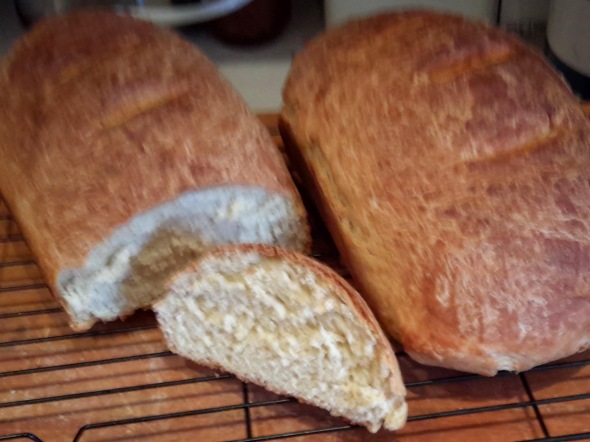
White Loaf

- Makes: 2 loaves
- Time:
- Mixing – Approx. 10 min
- Rising – 15 min
- Baking – 40 min
- Resting – 10 min
Ingredients:
- 6 cups (723 g) all-purpose flour
- 2 tbsp (24 g) instant yeast
- 1 tbsp (18 g) Kosher salt or 1 ½ tsp table salt
- 2 tbsp (25 g) granulated sugar
- 2 tbsp mayonnaise
- 2 cups very warm water (about 120F)
- 2 tbsp olive oil
Steps:
- Combine flour, yeast, salt, and sugar in a large mixing bowl. Yeast and salt do not like each other, so place them on opposite sides of the bowl. With a whisk, stir everything together. Add mayonnaise and water and, using a wooden spoon, mix everything together into a scraggly dough. There will still be a lot of flour not mixed in.
- Remove the dough from the bowl and begin to knead the dough, working in the loose flour. Continue kneading until it all comes together and forms a smooth dough. This will take no more than 4 minutes whether you do it by hand or machine.
- Place the dough back in the bowl (no need to clean it), cover with a tea towel, and put in a warm place to rise. I put mine in the oven with the oven light on. Let it rise for 15 minutes.
- Gently punch the dough down and divide in half.
- You can either shape the dough onto two free form loaves and bake on opposite ends of a parchment lined baking sheet or shape the dough into loaves and place in lightly greased loaf pans.
- With a sharp knife, make three slashes, about ¼ of an inch deep, in the top of each loaf. Drizzle 1 tbsp of olive oil over each loaf. Place the loaves on the middle rack of a COLD OVEN. It is very important that the oven is cold.
- Place a pan of hot tap water on the rack below the bread.
- Set the oven on 400F and bake the dough for 40 minutes.
- After 40 minutes, the bread will look risen and golden brown and sound hollow when tapped on top. I have never found the bread to take more than the 40 minutes. Removed the bread from the oven, cool for 10 minutes, then remove to a wire rack to cool completely.
Variations:
- Replace mayonnaise with 2 tbsp vegetable oil.
- Replace the water with 2 cracked large eggs, at room temperature. Place the eggs into a measuring cup and beat with a fork until the whites and yolks are combined. Add sufficient hot water to make 2 cups of liquid. Proceed as described above.
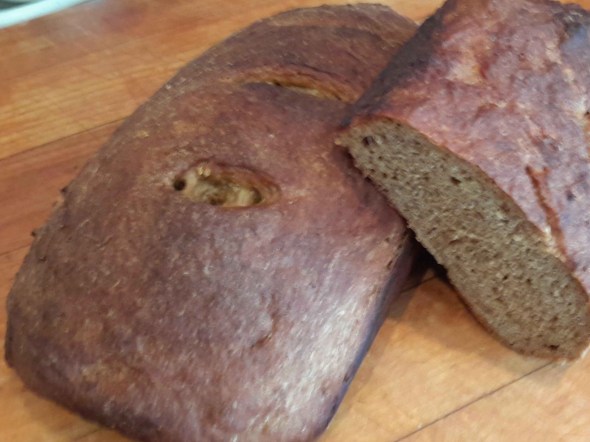
My Flavour Explosion Bread
- Makes: 2 loaves
- Time:
- Mixing – Approx. 10 min
- Rising – 15 min
- Baking – 40 min
- Resting – 10 min
Ingredients:
- 140g (1 ½ cups) rye flour
- 583g (4 ½ cups) all-purpose flour
- 25g instant yeast
- 25g granulated sugar
- 18g Kosher salt
- 1 ½ tsp ground allspice
- Finely grated zest of 1 orange (one heaping tbsp)
- 1 tsp fennel seeds (optional)
- 1 cup dark raisins
- ⅓ cup fancy molasses
- 1 ⅔ cup hot water (about 120⁰F)
- 2 tbsp canola oil
Steps:
- In a large bowl, combine the flours, yeast, sugar, salt, allspice, orange zest, and fennel. Yeast and salt do not like each other, so place them on opposite sides of the bowl. Stir with a whisk to combine. Next, stir in the raisins.
- Place the molasses in a liquid measuring cup and fill with enough hot water to make 2 cups. Stir together.
- Pour the water/molasses mixture into the flour mixture and stir together to make a scraggly dough.
- Remove the dough from the bowl and begin to knead the dough, working in the loose flour. Continue kneading until it all comes together and forms a smooth dough. This will take no more than 4 minutes whether you do it by hand or machine.
- Place the dough back in the bowl (no need to clean it), cover with a tea towel, and put in a warm place to rise. I put mine in the oven with the oven light on. Let it rise for 15 minutes.
- Gently punch the dough down and divide in half.
- You can either shape the dough onto two free form loaves and bake on opposite ends of a parchment lined baking sheet or shape the dough into loaves and place in lightly greased loaf pans.
- With a sharp knife, make three slashes, about ¼ of an inch deep, in the top of each loaf. Drizzle 1 tbsp of olive oil over each loaf. Place the loaves on the middle rack of a COLD OVEN. It is very important that the oven is cold.
- Place a pan of hot tap water on the rack below the bread.
- Set the oven on 400F and bake the dough for 40 minutes.
- After 40 minutes, the bread will look risen and golden brown and sound hollow when tapped on top. I have never found the bread to take more than the 40 minutes. Removed the bread from the oven, cool for 10 minutes, then remove to a wire rack to cool completely.








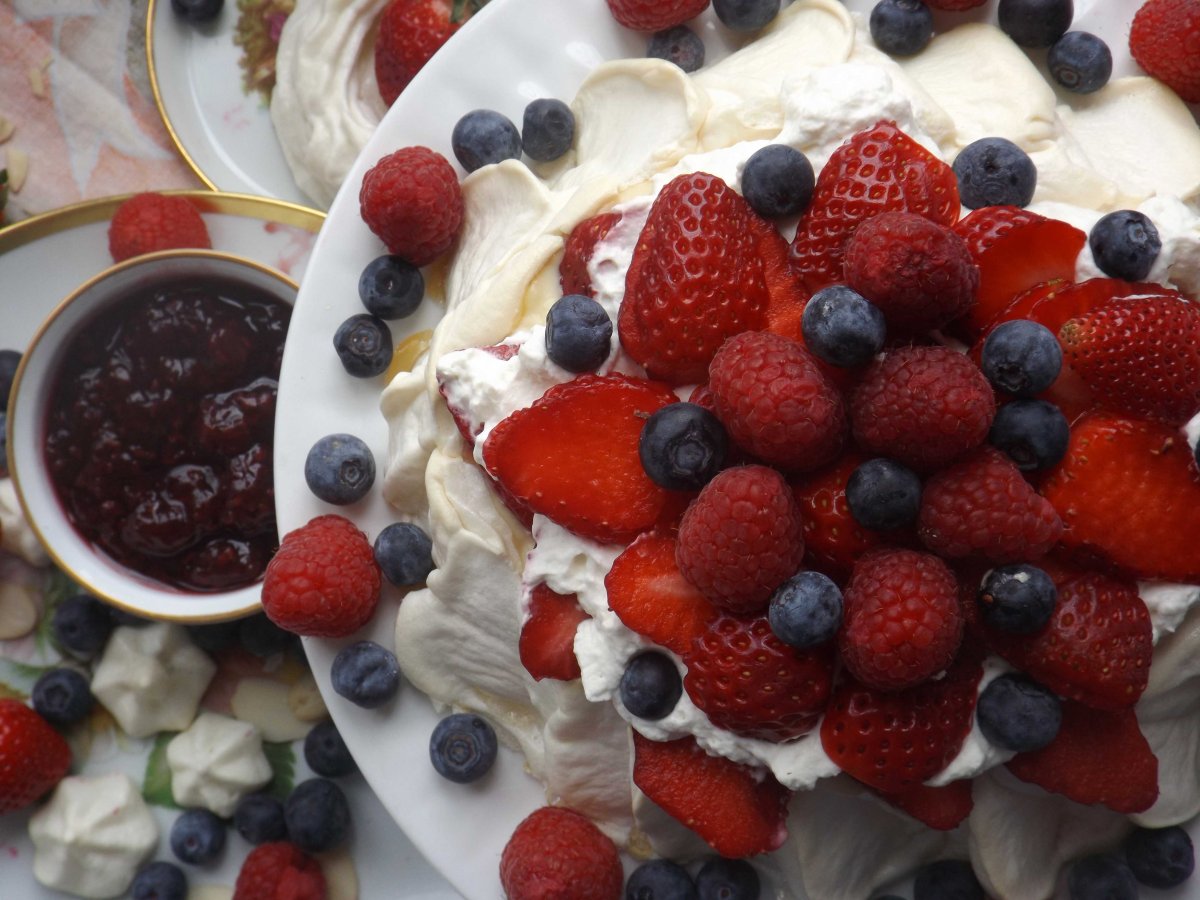
 One of my friends and I shared a back-and-forth on the challenges of hosting parties given all the dietary restrictions – beyond the usual food likes and dislikes – that abound today. For example, in my immediate family there are several considerations that have to be taken into account when planning a menu: one of my children has a nut allergy (developed as an adult), another has become lactose intolerant and cannot, like one of her aunts, tolerate pork or ham; a sibling has become lactose intolerant and cannot have gluten products unless they are organic; another family member is allergic to shrimp and prawns. All things considered, at times it feels like the list of foods that cannot be served is longer than the list of those that can! Plain rice anyone? Some of the problems are easily solved – like the pork and prawns – just don’t serve them. Keeping things both lactose and gluten free is more of a challenge. Finding organic flour is easy these days but we have a friend who has Celiac Disease and so any gluten-containing flour, organic or not, is out. My friend, with whom I was having the conversation,commented that my family sounded like hers, except that her husband is also diabetic and has to be very careful about sugar intake. As our conversation continued, she told me about how her husband, an Australian, loves pavlova and meringue which, of course, are mostly sugar. She had tried experimenting with various sugar substitutes and found them either way too sweet, with a bitter aftertaste, or, that they responded to heat in ways that didn’t work.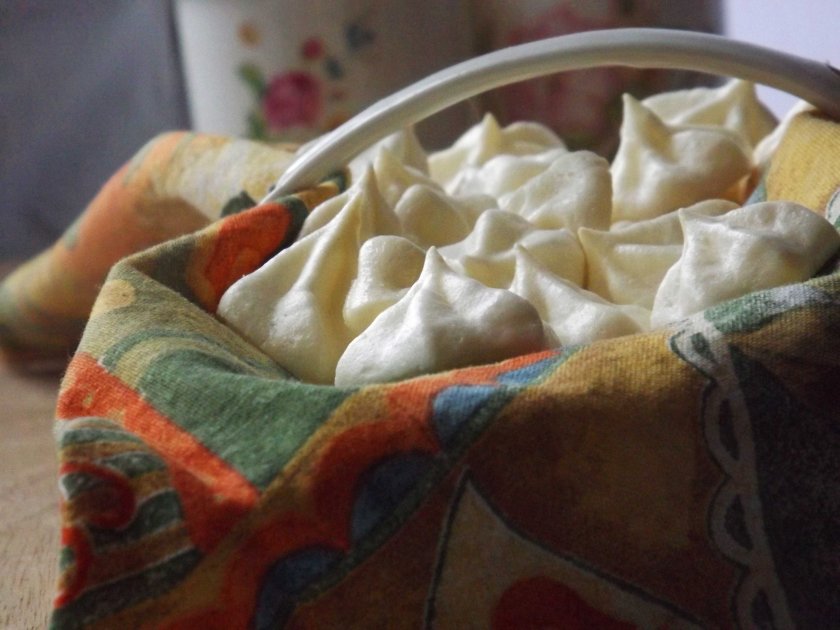
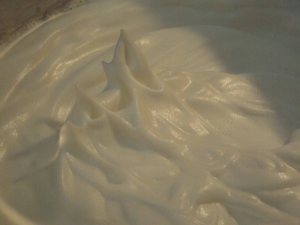
 My starting point was classic meringue.
 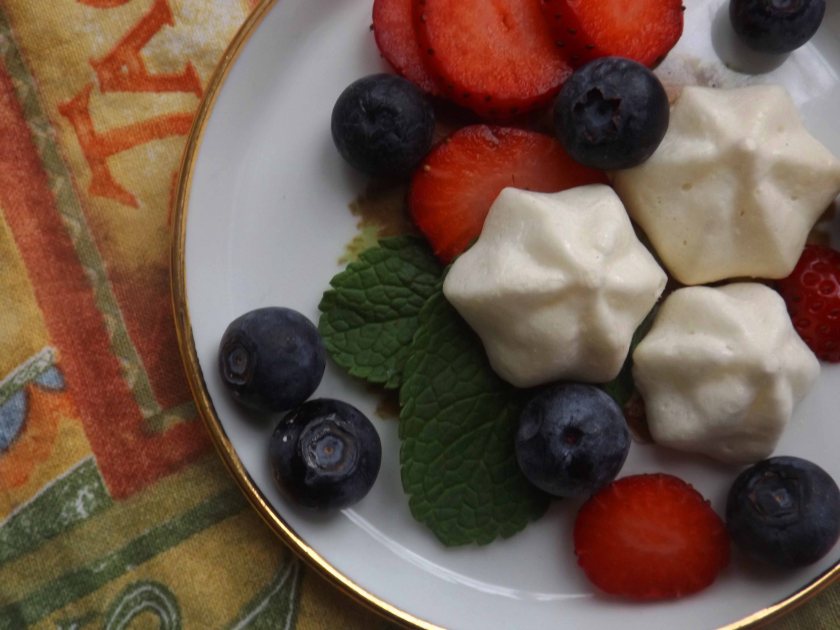 While working on the sugar reduced meringues, one of the first things I found was that using my stand mixer beat way too much air into the whites and the baked product was akin to styrofoam. Using my electric hand mixer on high worked perfectly.
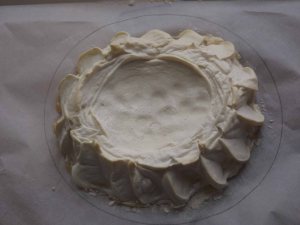
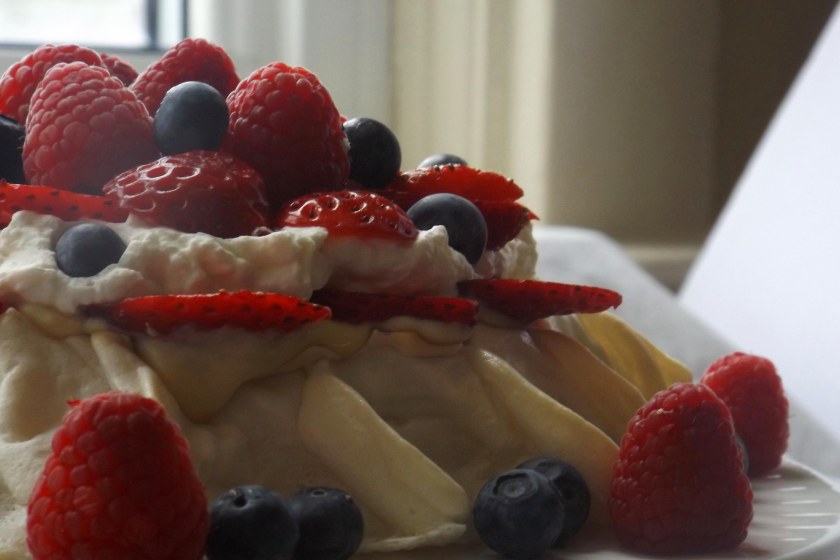 The real baking challenge was the large shell for for a pavlova. I tried baking it at a higher starting temperature (350F – normally meringues are baked at between 200F and 250F for around an hour) to set the meringue. Then, after 5 minutes, I turned the temperature back down to the more usual range to finish baking but the meringue browned too much and didn’t crisp. I tried a longer bake at a low temperature. The first attempt at this resulted in a charred meringue as the oven setting had somehow got changed from Fahrenheit degrees to Celsius without me noticing. Oven tricks aside, the longer bake at a low temperature was ultimately a fail. It looked good but it just wasn’t crisp.
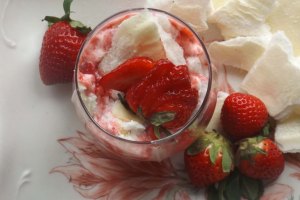
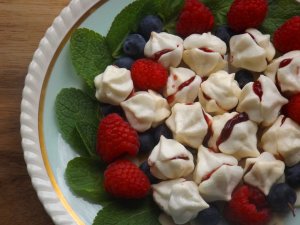 One last note about these low sugar meringues. Once they are exposed to moisture they soften much more quickly than traditional meringues. For this reason, I recommend not filling or constructing your nests or pavlova more than about 45 minutes before you plan to serve them. You can have all the elements ready and then it takes not even 5 minutes to finish the dessert off. You will also notice in the photos, that I have sandwiched some of the little kisses together with raspberry jam and they became soft quite quickly. The jam I used was a President’s Choice blue brand that I hadn’t noticed before: a raspberry jam without added sugar and also without any artificial sweetener (which I can always taste). It’s quite a moist, soft-set jam, but really good. I’ve also been using it as an accompaniment to lemon cheesecake.
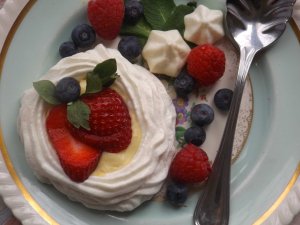 Because my trials and experiments left me with egg yolks, I also made an orange flavoured crème pâtissière in which I reduced the sugar to 1 tbsp for the whole amount and used orange extract and orange zest for the flavouring. If you are not concerned about adding sugar or alcohol, you might want to increase the sugar to 3 to 4 tbsp and flavour with orange zest and an orange liqueur. For one pavlova, I used the crème pâtissière as was and then topped it off with vanilla flavoured, unsweetened, whipped cream and fruit. For the other pavlova and the meringue nests, I folded the crème pâtissière and the whipped cream (which I further stabilized with gelatin) together to make crème diplomat.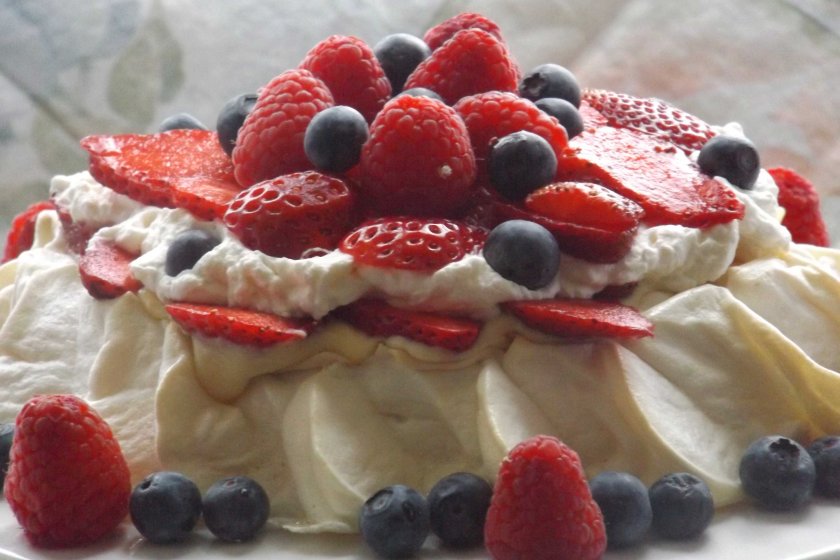


 Eton Mess (or Eat-in-a Mess) –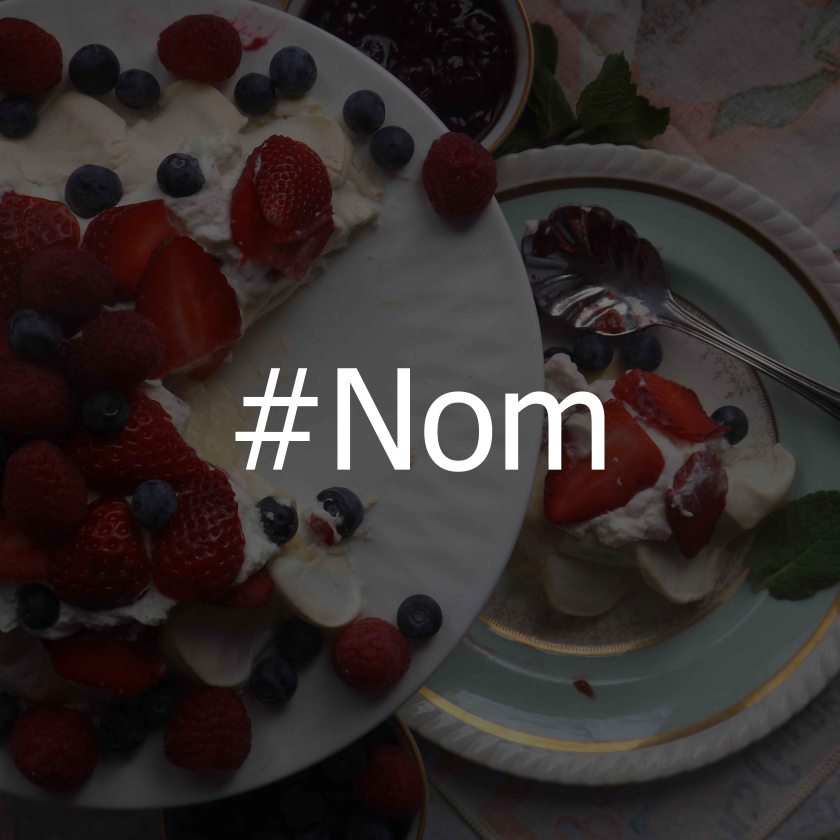









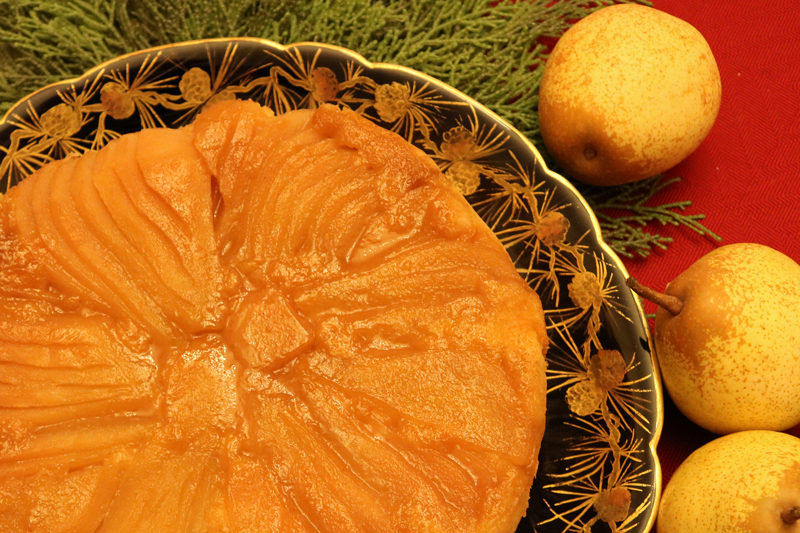
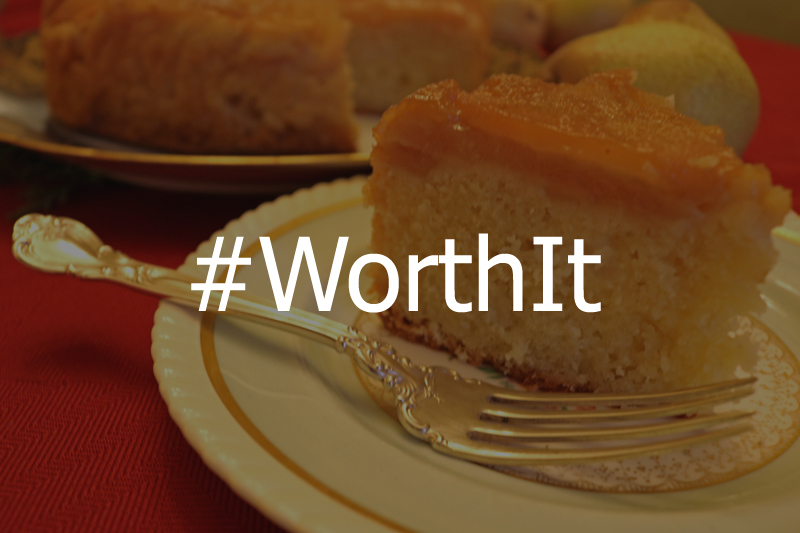
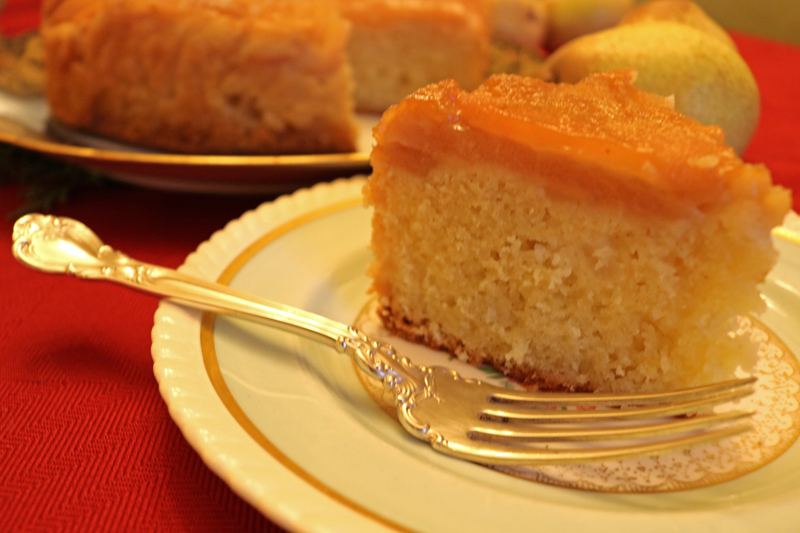 For years I have read and enjoyed the food writing and recipe development of America’s Test Kitchen. While I haven’t always agreed with what they’ve deemed the definitive version of whatever, I have been drawn to their methodology. Now I am determined to give it a go myself, wondering how many pear cakes it would take me to reach perfection (or cause a family revolt: “Not another pear cake!”).
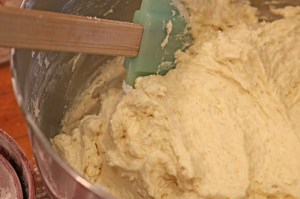
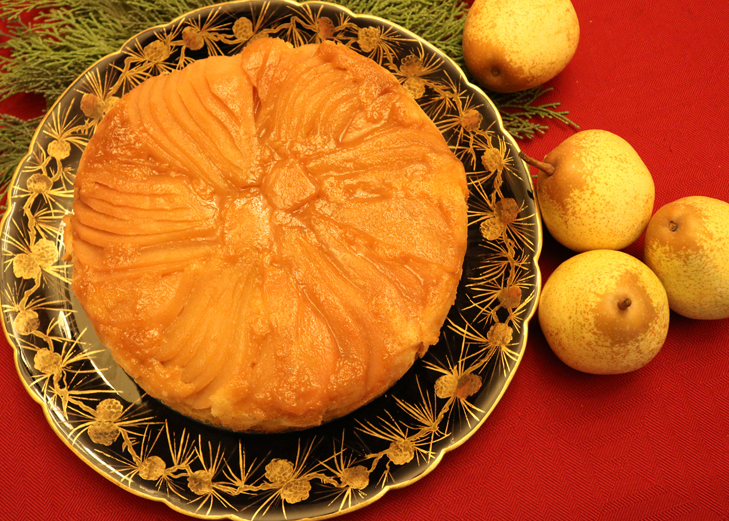 Recalling a coffee cake recipe that had the baker fold lemon curd into the cake batter, I made a thick pear sauce (reminiscent of apple sauce) and folded it into the cake batter of the original recipe. I increased the amount of flour by a few tablespoons to compensate for the extra moisture and then stirred in the chopped pear. When the cake came out of the oven, it looked promising. When cut, the texture was fine, the over-all appearance enticing. But the pear taste? Still wasn’t there. What next?
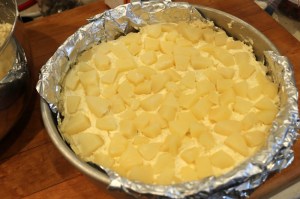
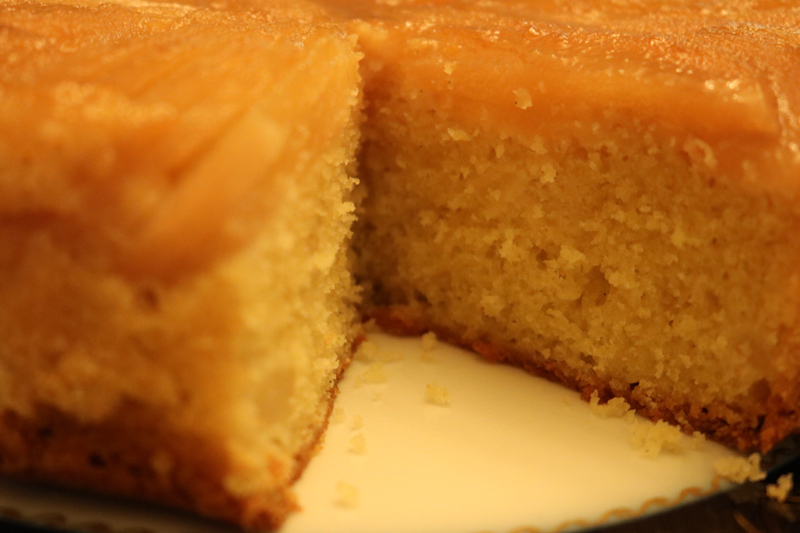 One last change – another “hit” of pear was needed to carry the taste from the top to the bottom of the cake. I’d learned that to be tasted, the pears inside a cake were best layered together rather than folded in. But I couldn’t use rock-hard pears in the middle of the cake and I wasn’t prepared to fuss around with coordinating pears of two degrees of ripeness nor was I prepared to go to the trouble of poaching the pears separately. After all, you reach a point where the whole baking project becomes too much effort. My solution? Canned pears because they are tender but maintain their shape in baking when well drained.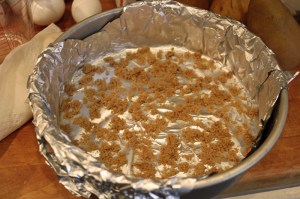
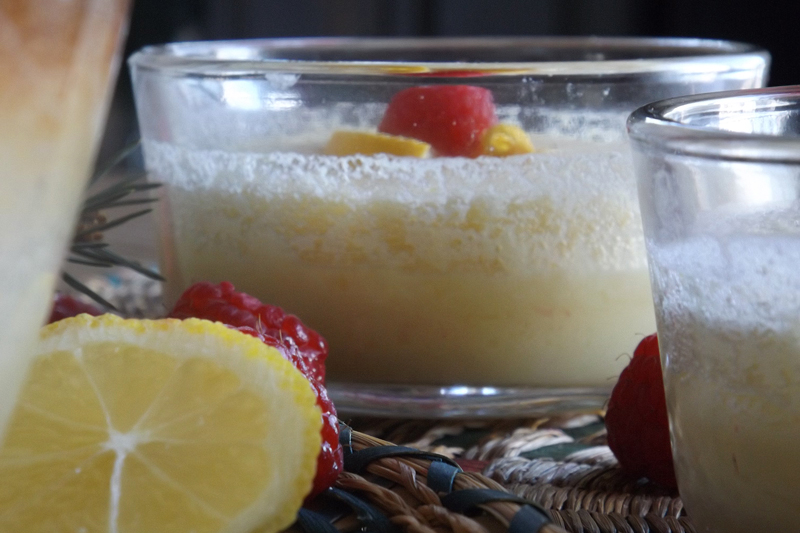


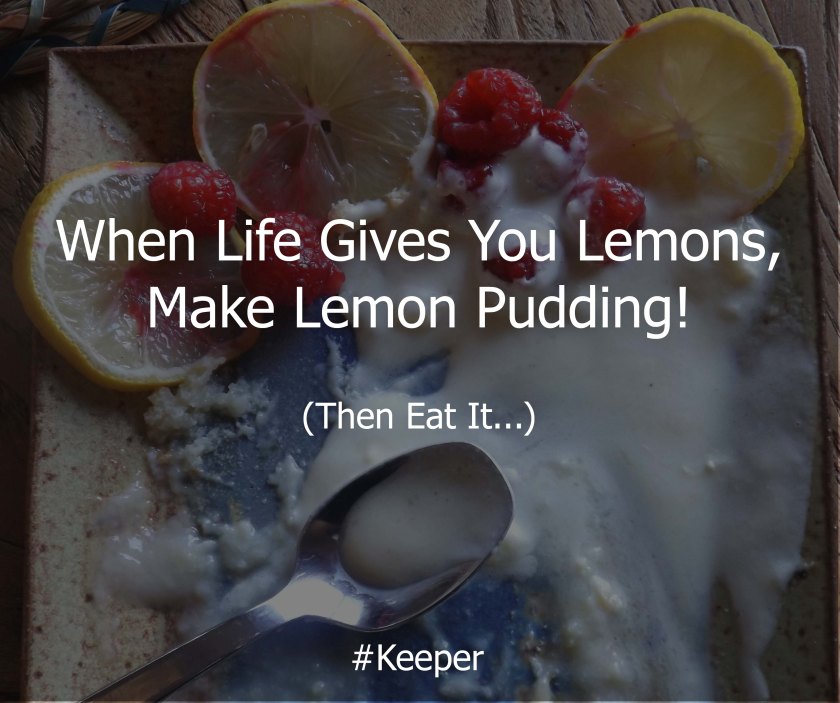
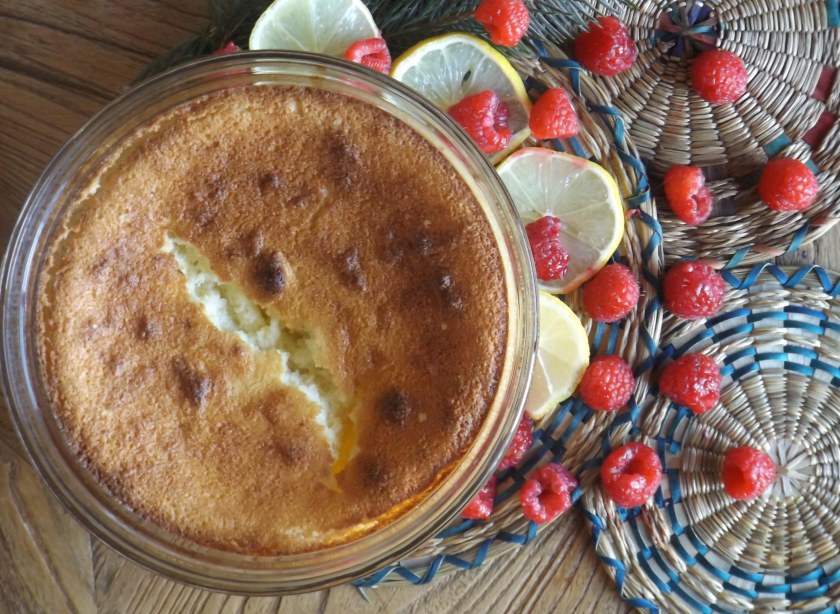 Some of my grandmother’s recipes that I really can’t do without are written on the end pages of one of the first cookbooks that I purchased for myself, The Fannie Farmer Baking Book, when I moved into my first apartment. Of those, the one that I return to most often is Nain’s Lemon Pudding. It is light, fresh, and deliciously lemon. I like to serve it warm with a scoop of frozen vanilla yogurt.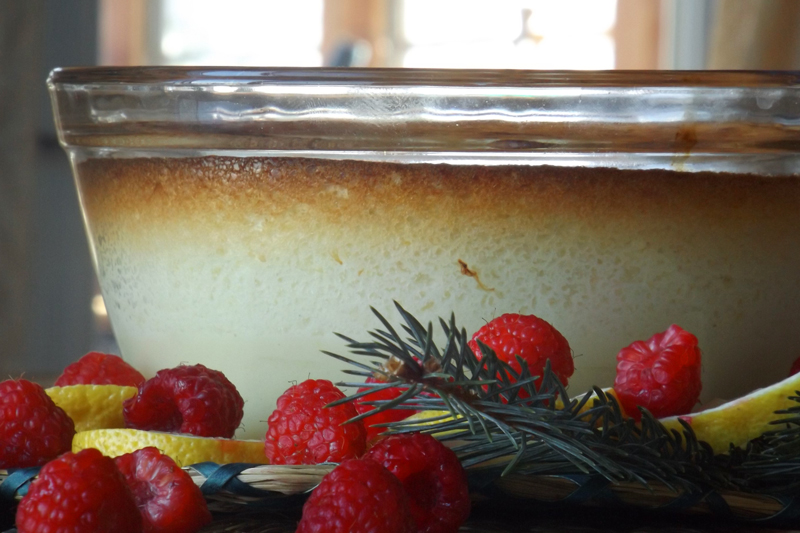

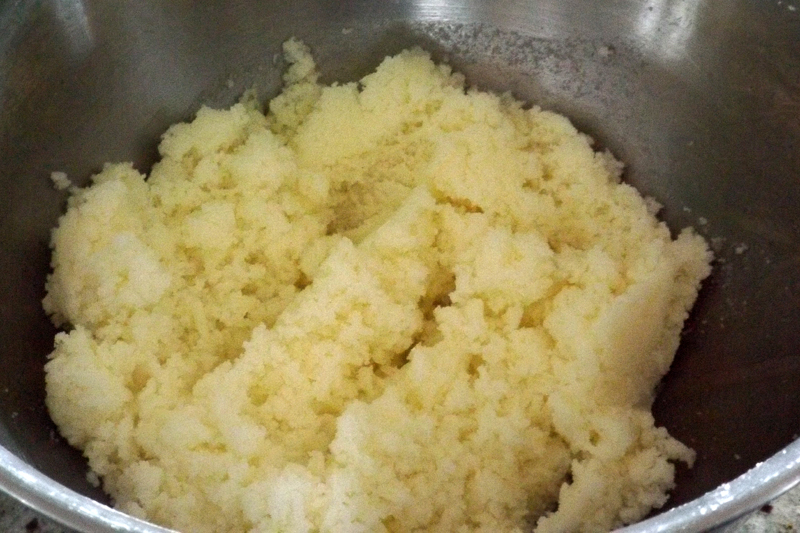

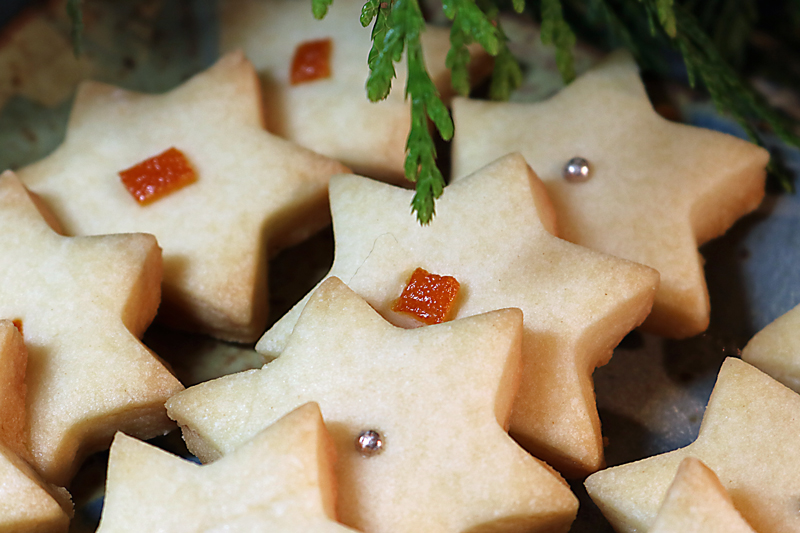
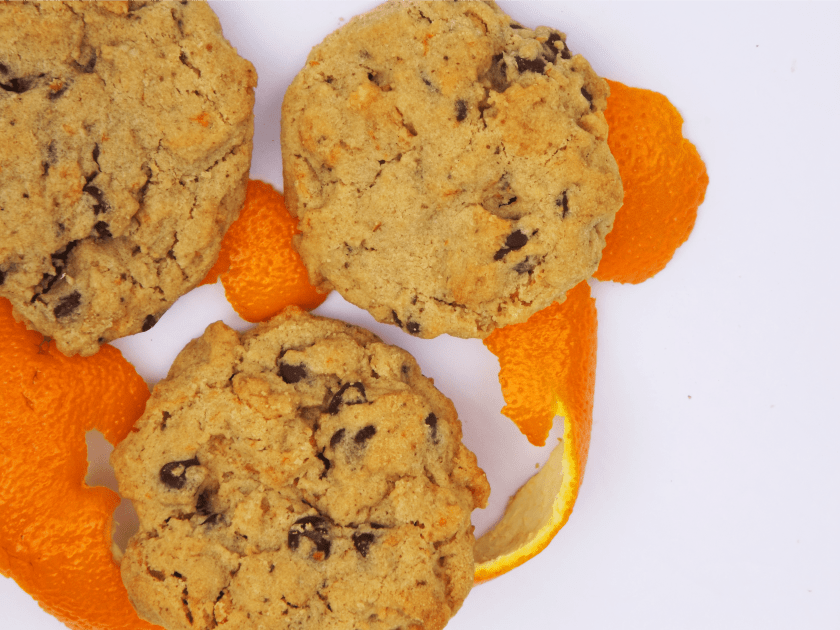
 Most Decembers I make candied orange peel. Last year I decided to use my own peel in place of the commercially produced kind called for in recipes. Tasted side by side, there is no comparison between the homemade and store-bought peel. As I had made much more than I needed, I chopped up some into pieces similar in size to the commercial and suspended them in some of the cooking syrup. The rest, coated in sugar, I left in strips. I froze both in freezer-proof Ziplock bags and forgot about them until this November when I was working on













 My Recipe Obsession